Water savings in hotels: 9 measures that keep guests comfortable
In a hotel, water goes to guest bathrooms, the laundry, the kitchen, the garden and air conditioning. See how much each use weighs, the 9 measures that save water without touching comfort, the hotel that cut consumption per occupied room by 35% and how to measure the result.
By T&D Sustentável 9 min read
In this article · 8
- Where does the water go in a hotel?
- What are the 9 measures that save water without reducing guest comfort?
- How much does a hotel save with these measures?
- Does saving water attract guests?
- How do you measure water savings in a hotel?
- How does T&D help hotels save water?
- Frequently asked questions
- Sources
Water savings in hotels come from five places: guest bathrooms, the laundry, the garden, the kitchen and air conditioning, in that order of weight in the hotels studied by the US Environmental Protection Agency (EPA). At a 397-room hotel in Texas, replacing toilets, showerheads and aerators cut consumption per occupied room by 35%, and maintenance stopped getting calls about the fittings. The measures below follow the same logic: less water, the same comfort.
In short:
- In US hotels, bathrooms account for 30% of water, laundry and landscaping 16% each, the kitchen 14% and heating and cooling 12%, according to the EPA.
- With efficient toilets, showerheads and aerators, the Texas hotel went from about 765 to 500 litres per occupied room per day.
- A towel and linen reuse programme cuts laundry loads by 17%, according to the American hotel association figure cited by the EPA.
- Much of the water a hotel saves is hot water, so the energy bill falls too.
- The indicator that separates occupancy from waste is consumption per occupied room, tracked every month.
Where does the water go in a hotel?
To the bathrooms, first of all. The EPA analysed consumption data from US hotels and arrived at this breakdown:
| Use | Share of consumption | Where the waste usually is |
|---|---|---|
| Guest and public bathrooms | 30% | High-flow showerheads, old toilets, silently leaking cisterns, taps without aerators |
| Laundry | 16% | Old washers, half loads, daily towel and bed linen changes nobody asked for |
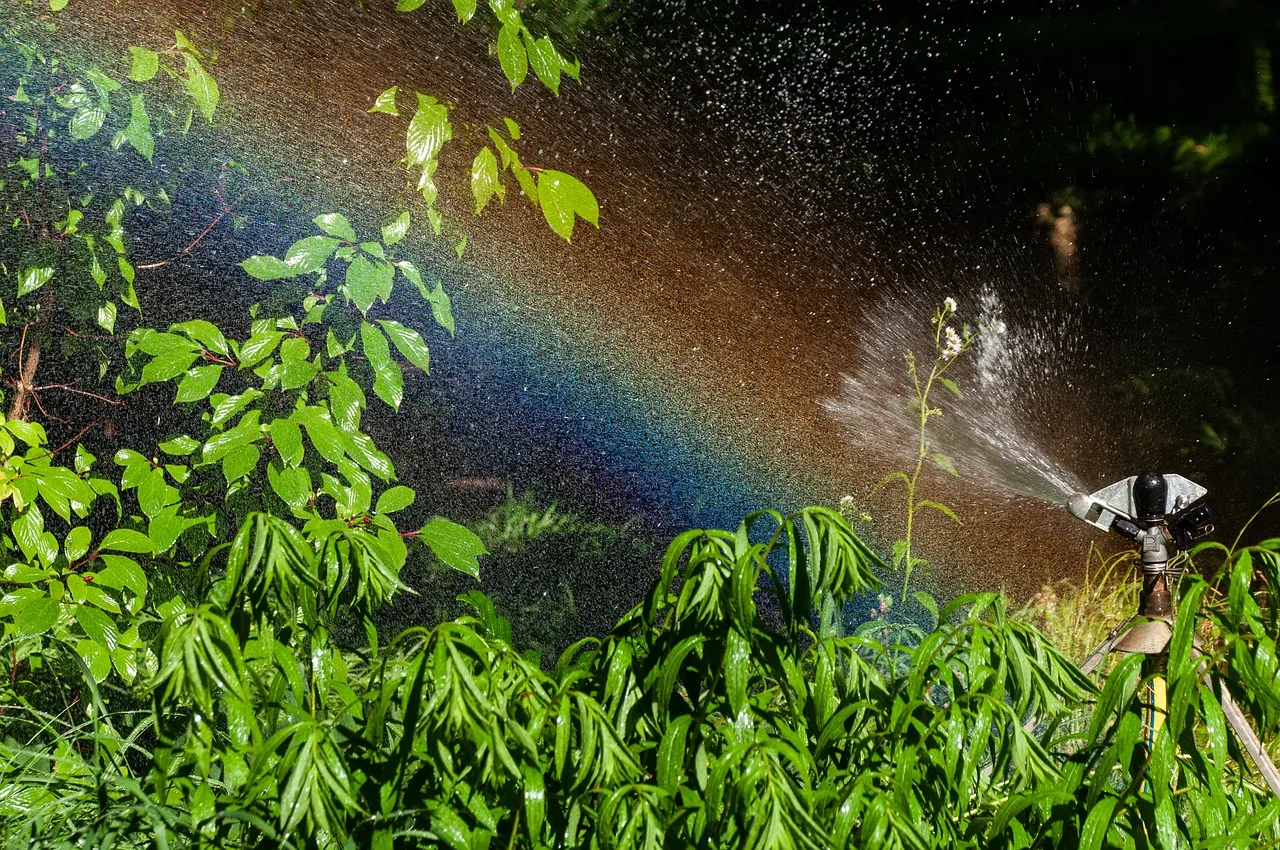
| Landscaping | 16% | Watering in the midday sun, badly adjusted sprinklers, timers that water even when it rains |
| Kitchen | 14% | Old pre-rinse spray valves, food washed under running water, equipment left running |
| Heating and cooling | 12% | Cooling tower without control of the water it discharges |
| Swimming pool | 1% | Filter backwashing beyond what is needed |
| Other | 12% | Miscellaneous uses and leaks in the pipes |
In Brazil, the breakdown changes with the hotel’s profile. An outsourced laundry leaves the hotel’s water bill; a resort with pools, spa and large gardens weighs more outside the rooms; a business hotel with central air conditioning weighs more in cooling. That is why the first step of any programme is to measure the hotel’s own breakdown.
What are the 9 measures that save water without reducing guest comfort?
- Hunt for leaks in the rooms, every month. A toilet with a visible trickle wastes 144 litres a day, according to the water conservation manual of Brazil’s National Water Agency (ANA), FIESP and SindusCon-SP. The housekeeper is the first to see a toilet that keeps running; with a direct line to maintenance, the leak lasts hours, not weeks.
- Fit aerators on the taps. At the Texas hotel, the flow of the guest-room taps fell from about 8.3 to 5.7 litres per minute.
- Replace showerheads with controlled-flow models. In the same case, from 9.5 to 6.6 litres per minute. Models certified by the EPA use at least 20% less water and are tested to perform as well as or better than standard ones.
- Replace old toilets. The hotel swapped toilets of 13 and 19 litres per flush for 4.2-litre models. In Brazil, the path is the 6-litre or the dual-flush toilet.
- Offer towel and linen reuse, at the guest’s choice. The programme cuts laundry loads by 17%. Train housekeeping to respect the choice: the sign in the bathroom saves nothing if the towel is changed anyway.
- Modernise the laundry. Efficient washers, always fully loaded, and, in an on-site laundry, a study of reusing rinse water.
- Replace the kitchen’s pre-rinse spray valve. An efficient valve saves more than 26,000 litres a year in a typical commercial kitchen, according to the EPA. Scraping leftovers off plates before rinsing and switching off equipment that runs water continuously complete the list.
- Water intelligently. A weather-based irrigation controller instead of a timer, early-morning watering and landscaping that needs less water. The Texas hotel also began using condensate from the air conditioning for irrigation and reusing pool filter backwash water.
- Meter by area and track by occupied room. Separate meters in the laundry, kitchen, pool and cooling system show where consumption drifts. With remote monitoring, night-time consumption becomes an alert on a phone.
None of these measures looks like a restriction to the guest. The ones guests do see, the aerator and the showerhead, were chosen precisely because they keep performance, and towel reuse depends on their own choice.
How much does a hotel save with these measures?
The best documented case is that of a chain hotel at San Antonio airport, in Texas, published by the EPA in 2014. The building, from 1981, had never had a major renovation of the bathrooms in its 397 rooms. The retrofit, carried out in 2007 under the city water utility’s programme, produced these numbers:
| Item | Before | After |
|---|---|---|
| Toilets (397 replaced) | 13.2 or 18.9 litres per flush | 4.2 litres per flush |
| Tap aerators (397) | 8.3 litres per minute | 5.7 litres per minute |
| Showerheads (397) | 9.5 litres per minute | 6.6 litres per minute |
| Consumption per occupied room | About 765 litres a day | About 500 litres a day |
| Water saved | About 26.5 million litres a year |
Two side effects came as a bonus. Because much of the water saved was hot, the hotel spent less energy heating it. And maintenance, which used to receive one or two calls a day about the old fittings, stopped receiving them.
Every hotel starts from a different point, and the number only counts once it is measured. In T&D’s SEA 360º, the ceiling observed in the full programme is a 70% reduction, and each client’s result is calculated against the building’s own baseline.
Does saving water attract guests?
It helps, when the hotel can show the result. The EPA cites a TripAdvisor survey in which 79% of travellers said they look for eco-friendly accommodation, and green hotel certification programmes look precisely at water and energy. For chains and hotels that serve companies, there is also the sustainability report, where water consumption is one of the indicators.
What convinces is data, not the sticker on the mirror. Litres per occupied room before and after, measured the same way, are worth more than any generic label. The step by step for taking that number to the report, with the GRI indicators, is in ESG and water management.
How do you measure water savings in a hotel?
By consumption per occupied room, not by the total on the bill. The total rises in high season and falls in low season, and hides both waste and savings. The path:
- Baseline. Twelve months of consumption, month by month, with each month’s occupancy.
- Indicator. Litres per occupied room per day, or per guest per night. For restaurants and events, an indicator of their own, such as litres per meal.
- Adjustment. The before-and-after comparison corrects for the variables that changed, such as occupancy and weather. That is what the international IPMVP protocol requires, and T&D uses it to calculate savings.
- Tracking. The month’s indicator compared with the same month of the previous year. An unexplained deviation signals a leak or a procedure that slipped back.
The full roadmap for any business, from quick measures to ongoing management, is in the guide to water savings for businesses.
How does T&D help hotels save water?
With SEA 360º, which serves hotels and resorts in two phases. Implementation, with no construction work, covers the baseline under IPMVP, efficiency technology at points of use in rooms and common areas, electronic leak detection, repairs and training for maintenance. In ongoing management, T&D tracks consumption and delivers monthly reports on financial, operational and ESG performance.
TDRR remote monitoring tracks water tanks, cisterns, pumps and hourly consumption, and sends an alert by app, text message or WhatsApp when something drifts. After the first results, SEA+ uses the savings generated to fund larger projects, such as water reuse and rainwater harvesting.
Frequently asked questions
How much water does a hotel use per room?
It varies a lot with the type of hotel: pool, on-site laundry, restaurant and climate change the numbers. As a reference, the 397-room hotel in the EPA case used about 765 litres per occupied room per day before replacing its bathroom fittings, and about 500 afterwards. The number that matters is your hotel’s, measured month by month.
Do towel reuse programmes work?
They work when they are respected. According to the American hotel association, cited by the EPA, they cut laundry loads by 17%. The choice must be the guest’s, and housekeeping must be trained not to replace a towel left hanging.
Do aerators and low-flow showerheads bother guests?
Certified models do not. The EPA certifies taps, showerheads and toilets that use at least 20% less water and perform as well as or better than standard models. At the Texas hotel, the retrofit put an end to maintenance calls about the fittings.
Where should a hotel start saving water?
With leaks and metering. Fixing the toilet that runs and the float valve that overflows gives water back from day one, without changing anything the guest uses. Metering by area then shows where replacing equipment pays off.
Can guesthouses and small hotels save water too?
Yes, with the same measures: aerators, controlled-flow showerheads, efficient toilets, leak hunting and tracking consumption per occupied room. In a small operation, each leak weighs more on the bill, because there is less consumption to dilute it.
Sources
- EPA WaterSense, Saving Water in Hotels (EPA-832-F-12-032, 2016): end uses of water in hotels, towel and linen reuse, the TripAdvisor survey and pre-rinse spray valve savings
- EPA WaterSense, Hotel Installs Water-Efficient Sanitary Fixtures (EPA-832-F-14-002-G, 2014): the case of the 397-room hotel in San Antonio, Texas
- Conservação e reúso da água em edificações (ANA, FIESP and SindusCon-SP, 2005), leak loss table, reproduced in Souza et al., XXI Brazilian Water Resources Symposium (ABRHidro, 2015), in Portuguese
- IPMVP Core Concepts, Efficiency Valuation Organization (EVO)
- T&D SEA 360º and TDRR