Sewage in Brazil: 90 million without collection and the 2033 target
About 90 million Brazilians have no sewage collection, and only 51.8% of the sewage generated is treated. See the SINISA 2024 numbers, how a treatment plant works, what happens to sewage that goes straight into rivers, the 2033 target of the Sanitation Framework and how a company's sewage is handled.
By T&D Sustentável 7 min read
In this article · 7
Sewage collection and treatment are the two services that take sewage away from homes, shops and factories and return it to nature without polluting. In Brazil, both lag behind: in 2024, about 90 million people, 43.3% of the population, had no collection, and only 51.8% of the sewage generated was treated, according to SINISA, the national sanitation information system, in a survey by Instituto Trata Brasil. The law requires 90% collection and treatment by the end of 2033.
In short:
- In 2024, sewage collection reached 56.7% of the population, and treatment, 51.8% of the sewage generated. Treated water reached 84.1%.
- The Sanitation Legal Framework (Law No. 14,026/2020) set the target of 99% with drinking water and 90% with sewage collection and treatment by 31 December 2033.
- Inequality is huge: among the 100 largest municipalities, the best 20 collect 98.08% of their sewage, and the worst 20, 28.06%.
- Untreated sewage uses up the oxygen in rivers, spreads disease and makes the water that cities abstract downstream more expensive.
- In a company, many utilities charge sewage on the metered water volume: every litre saved reduces both parts of the bill.
What is the state of sewage collection and treatment in Brazil?
Far from the target. Instituto Trata Brasil’s 2026 Sanitation Ranking, with GO Associados, brings together the SINISA indicators for 2024:
| Indicator | Brazil in 2024 | 100 largest municipalities | 2033 target |
|---|---|---|---|
| Population with treated water | 84.1% | 93.55% | 99% |
| Population with sewage collection | 56.7% | 76.97% | 90% |
| Sewage treated | 51.8% | 64.42% | 90% |
The average hides huge gaps. In the ranking’s best 20 municipalities, collection reaches 98.08% and treatment 77.97%; in the worst 20, 28.06% and 28.36%. Franca, São José do Rio Preto, Campinas and Santos, all in São Paulo state, lead and are already considered universalised. In Santarém (Pará), only 3.28% of the population has collection.
Among state capitals, only seven exceed 90% collection: Goiânia, São Paulo, Curitiba, Campo Grande, Brasília, Boa Vista and Belo Horizonte. At the other end are Macapá, with 14.94%, and Porto Velho, with 8.69%. The North and Northeast hold the worst positions, and the South and Southeast the best.
How does sewage treatment work?
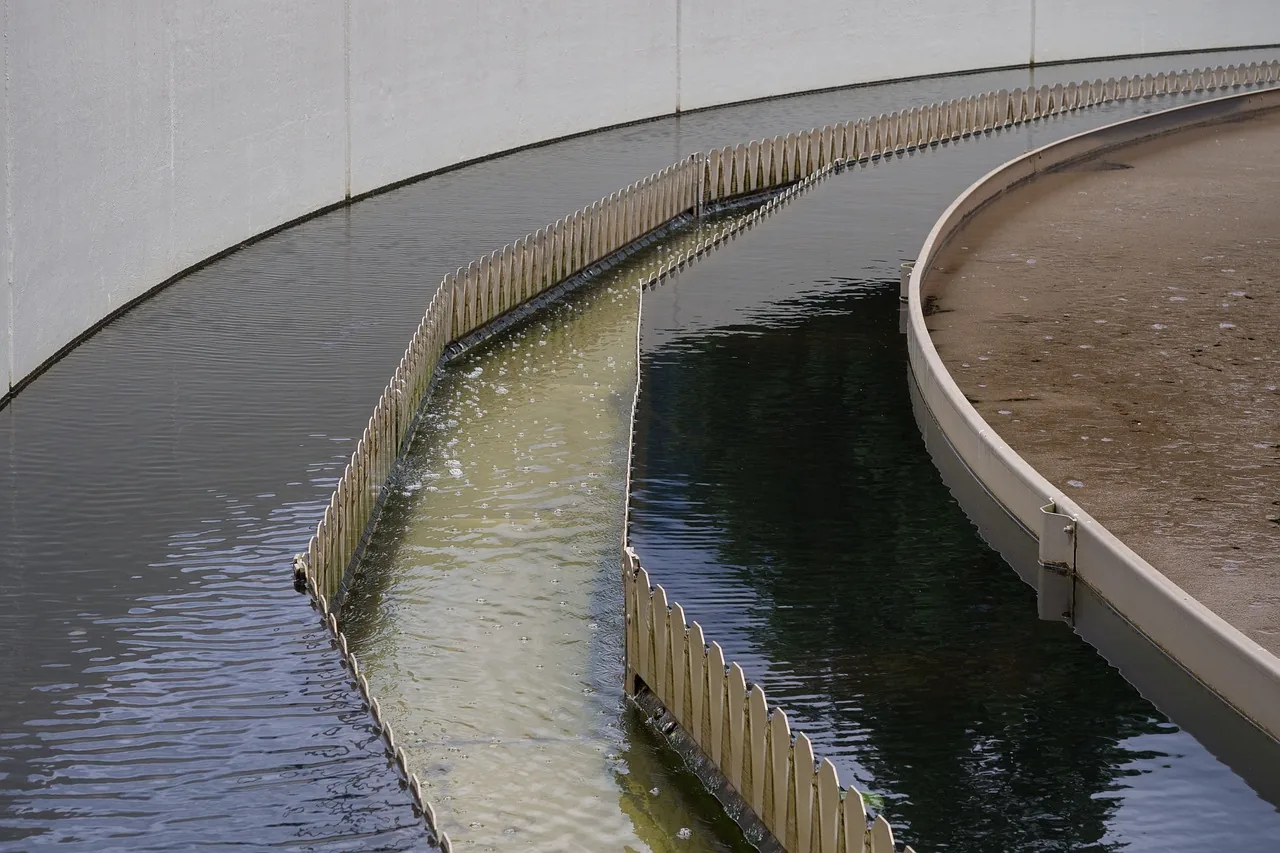
In stages that remove, one by one, what sewage carries. Each plant combines the stages according to the volume, the type of sewage and the requirements of the receiving river:
| Stage | What it removes | How |
|---|---|---|
| Preliminary | Litter, sand and large objects | Screens, sieves and grit chambers |
| Primary | Solids that sink and grease that floats | Settling tanks, where the sewage flows slowly |
| Secondary | Dissolved organic matter | Bacteria that consume the organic matter, in aerated reactors, anaerobic reactors or ponds |
| Tertiary | Nutrients, such as nitrogen and phosphorus, and microorganisms | Chemical and biological processes and disinfection |
| Sludge treatment | The sludge generated in the previous stages | Thickening, digestion and drying before disposal |
The sanitation law already provides two destinations for treated sewage: discharge into the environment or the production of reuse water. Instead of going back to the river, treated effluent can supply industry, irrigation and street cleaning.
What happens to sewage that is not treated?
It pollutes the river, the soil and the health of those who live nearby. Three effects add up:
- The river loses oxygen. The bacteria that break down the organic matter in sewage consume the oxygen in the water, and fish and other organisms die. The river turns dark and starts to smell.
- Disease spreads. Open sewage and contaminated water transmit diarrhoea, hepatitis A, worms and other waterborne diseases, which hit children above all.
- Water becomes more expensive. A city that abstracts water from a river polluted by another city’s sewage needs more complex treatment, and sometimes has to look for more distant sources.
Trata Brasil links the backlog to effects beyond health: lost productivity at work, lower property values, losses in tourism and a lower quality of life.
What does the Sanitation Legal Framework say?
Law No. 14,026/2020 amended the Sanitation Law (Law No. 11,445/2007) and now requires, in Article 11-B, that service contracts include targets ensuring 99% of the population has drinking water and 90% has sewage collection and treatment by 31 December 2033. Contracts must also include targets for continuity of supply, loss reduction and better treatment processes.
The challenge is investment. According to the 2026 Sanitation Ranking, 51 of the 100 largest municipalities invest per inhabitant less than half of what the National Basic Sanitation Plan estimates is needed to universalise services, and the municipalities that invest most are precisely those already close to the target. Losses of treated water, the other end of efficiency, are covered in water losses: Brazil loses 39.53% before the tap.
And a company’s sewage?
The company pays for it and is responsible for it. On the bill, many utilities charge sewage on the volume of water recorded by the meter, so every litre of water saved also reduces the sewage charge. How to read each field of the bill and spot billing errors is in how to read a company water bill.
In operations, effluent from industry and some commercial activities must meet discharge standards, such as those of CONAMA Resolution No. 430/2011, and often goes through its own treatment before reaching the network or the river. And treated effluent can become reuse water inside the company itself, in cooling towers, boilers, cleaning and toilet flushing, as shown in the step by step of water reuse in industry.
The first saving, however, comes before the sewage: using less water. T&D’s SEA 360º handles implementation, without building works, with a baseline under the IPMVP protocol, efficiency technology at points of use, electronic leak detection and repairs, and continues with ongoing management, with monthly efficiency and ESG impact reports. The ceiling observed in the full programme is a 70% reduction in consumption.
Frequently asked questions
How many Brazilians have no sewage collection?
About 90 million, or 43.3% of the population, in 2024, according to Instituto Trata Brasil based on SINISA. In the same year, more than 30 million Brazilians had no access to treated water.
How much of Brazil’s sewage is treated?
51.8% of the sewage generated in 2024, according to SINISA. In the 100 most populous municipalities, the average rate was 64.42%, still far from the 90% target for 2033.
What is the target of the Sanitation Legal Framework?
To provide 99% of the population with drinking water and 90% with sewage collection and treatment by 31 December 2033, as required by Article 11-B of Law No. 11,445/2007, as amended by Law No. 14,026/2020.
What is the difference between sewage collection and treatment?
Collection takes sewage away from the property and carries it through the network; treatment removes the pollution load before returning it to the river or turning it into reuse water. Sewage that is collected but not treated leaves the building, but keeps polluting the river where it is discharged.
Does a company pay for sewage on its water bill?
With many utilities, yes: sewage is charged on the metered water volume. So reducing water consumption reduces both parts of the bill. The exact rule varies by utility and by customer category.
Sources
- Instituto Trata Brasil and GO Associados. Ranking do Saneamento 2026 (SINISA, 2024), March 2026 release, in Portuguese: water supply, sewage collection and treatment in Brazil, in the 100 largest municipalities and in the capitals, and investment
- Law No. 11,445 of 5 January 2007, as amended by Law No. 14,026/2020, Articles 3 and 11-B, in Portuguese: definition of sewerage and universalisation targets to 2033
- CONAMA Resolution No. 430 of 13 May 2011, in Portuguese: effluent discharge conditions and standards
- T&D SEA 360º