Water saving awareness: why a campaign on its own is not enough
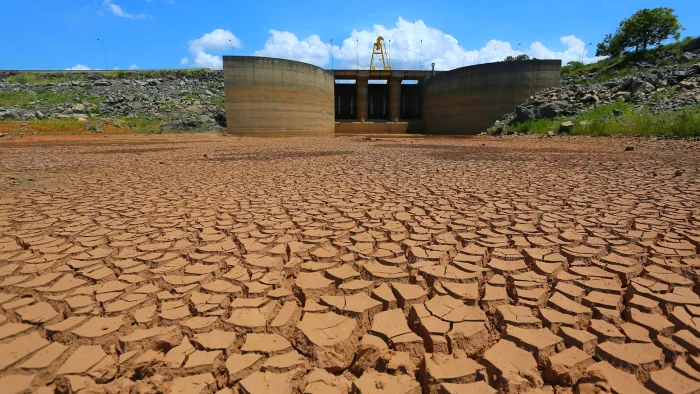
In the 2014 crisis, São Paulo ran campaigns on TV, door to door and in training courses, and gave a discount to those who saved water. It worked for most, but a year later some consumers were still above their average. See what Brazil's environmental education law says about companies, why a campaign alone is not enough, the 7 steps that work and ready-made notice templates.
By T&D Sustentável 7 min read
In this article · 8
- What does the law say about environmental education in companies?
- Why is an awareness campaign on its own not enough?
- How do you run a water saving campaign that works?
- Which notices should the campaign use?
- How do you measure the campaign’s result?
- How does T&D support awareness in the company?
- Frequently asked questions
- Sources
Awareness helps save water, but on its own it does not sustain the result. In the 2014 water crisis, Sabesp, São Paulo’s water utility, combined campaigns on television, door to door and in training courses with a discount on the bill, got 82% of customers in Greater São Paulo to cut consumption and, even so, had to create a surcharge for the share still above their average after a year of the programme. The same applies in a company: a campaign works when it comes with metering, a target, feedback and technology.
In short:
- Brazil’s National Environmental Education Policy, Law No. 9,795/1999, gives companies the task of promoting training programmes for workers on the workplace and on the effects of production on the environment.
- A campaign without metering proves nothing, and a campaign without feedback loses strength over time.
- Much of the waste does not depend on behaviour: invisible leaks and inefficient equipment do not respond to posters.
- Seven steps make the campaign work: baseline, target, notices at the point of use, a leak channel, monthly feedback, recognition and technology.
- Below, four notice templates ready for toilets, the kitchen, email and the noticeboard.
What does the law say about environmental education in companies?
That companies have a role too. Law No. 9,795/1999 defines environmental education as the processes through which individuals and the community build values, knowledge, skills, attitudes and competences aimed at conserving the environment. And, in Article 3, item V, it gives companies, professional bodies and public and private institutions the task of promoting training programmes for workers, to improve the workplace and control the effects of the production process on the environment.
The law also says environmental education must be present both formally and non-formally. Inside a company, it is non-formal: training, onboarding of new staff, campaigns and the maintenance routine. The version for schools, with a ready-made project for students, is in water savings in schools.
Why is an awareness campaign on its own not enough?
For three reasons that show up in any company:
- The effect fades over time. Sabesp itself recorded that, after a year of bonus and campaign, a share of consumers kept consumption above their average, and it created the contingency tariff for those who exceeded it. Without feedback and without consequences, the habit returns.
- Part of the waste is invisible. A toilet with a leak or a cracked pipe inside the wall wastes water 24 hours a day, and no one sees it. See invisible leaks.
- Without metering, no one knows if it worked. If the bill went down, it could have been the campaign, a holiday or a drop in production. Without a baseline, the result becomes an opinion.
That is why the campaign is one of the pieces, not the solution. The others are metering, maintenance and equipment that uses less by default. The most common sources of waste are in four invisible causes of water waste.
How do you run a water saving campaign that works?
With seven steps, in this order:
- Measure first. Record consumption for at least three months and, if possible, consumption by area and at night. That is your starting point.
- Set a simple target. A single number, such as cutting 10% in three months, communicated to everyone.
- Put notices at the point of use. A notice works where the water runs: tap, shower, toilet, hose, washing machine.
- Open a leak channel. A QR code or an extension number for anyone to report a dripping tap, a running toilet or a puddle with no reason, with a deadline for the repair.
- Give feedback every month. Publish the month’s consumption against the target, on the noticeboard, by email or at the meeting. Seeing the number keeps attention up.
- Recognise those who save. Compare areas, shifts or sites and recognise the best result.
- Take the savings out of the hands of behaviour. Aerators, flow restrictors, efficient toilets and automatic taps save water even when no one remembers the campaign.
Which notices should the campaign use?
Short notices, in the right place, with a concrete request. Four ready-made templates:
Toilets (sticker on the mirror or the tap):
Turn off the tap while you soap your hands. Seen something dripping or the toilet running? Report it with the QR code next to this notice.
Kitchen and pantry:
Wash the dishes in a full sink, not under a running tap. Every minute of a running tap can waste several litres.
Launch email:
Subject: Our water target for the next 3 months. Over the last three months, this site used [X] m³ of water a month. The target is to cut 10% by [date]. You can help by turning off the tap while you soap, reporting leaks with the QR code in the toilets and using the right flush. Every month, we will show the result on the noticeboard.
Noticeboard (updated every month):
Water consumption in [month]: [X] m³. Target: [Y] m³. Leaks reported: [N]. Fixed: [N]. Thank you to everyone who reported!
Notice templates for condominiums, written for residents, are in saving water in a residential building.
How do you measure the campaign’s result?
With four indicators, tracked every month:
| Indicator | What it shows |
|---|---|
| Monthly consumption (m³) | The overall result, compared with the baseline |
| Litres per employee per day | Consumption adjusted for headcount |
| Consumption overnight or at weekends | Leaks and equipment left running when not in use |
| Leaks reported and fixed | Whether the leak channel is working |
Consumption outside operating hours is the most revealing: if the company is closed and the meter is turning, there is a leak or equipment running. With remote monitoring, that alert arrives straight away, as explained in remote water consumption monitoring.
How does T&D support awareness in the company?
With the part the campaign cannot reach. SEA 360º handles implementation, without building works, with a baseline under the IPMVP protocol, efficiency technology at points of use, electronic leak detection, repairs and maintenance team training, and continues with ongoing management, with monthly efficiency and ESG impact reports that feed the campaign’s monthly feedback. The ceiling observed in the full programme is a 70% reduction in consumption.
Frequently asked questions
Does an awareness campaign reduce water consumption?
It does, but the effect fades without metering, a target and feedback. In the 2014 crisis, Sabesp’s campaign, with a discount on the bill, got 82% of customers in Greater São Paulo to cut consumption, and even so a surcharge had to be created for those who stayed above their average.
What does Brazil’s environmental education law say about companies?
Law No. 9,795/1999 gives companies, professional bodies and public and private institutions the task of promoting training programmes for workers, focused on the workplace and on the effects of the production process on the environment.
How do you get employees to save water?
With a simple target, notices at the point of use, a channel for reporting leaks, monthly feedback on consumption against the target and recognition of the best results. And with equipment that saves water even when no one remembers the campaign.
How do you know if a water saving campaign worked?
By comparing consumption with a baseline of at least three months and tracking consumption per employee and outside operating hours. Without a baseline, you cannot separate the campaign’s effect from other changes.
What is environmental education?
Under Law No. 9,795/1999, it is the processes through which individuals and the community build values, knowledge, skills, attitudes and competences aimed at conserving the environment. It must be present in formal education, as in schools, and in non-formal education, as in companies.
Sources
- Law No. 9,795 of 27 April 1999, Articles 1, 2 and 3, in Portuguese: National Environmental Education Policy
- Sabesp. Crise Hídrica, Estratégia e Soluções da Sabesp para a Região Metropolitana de São Paulo (CHESS), April 2015, in Portuguese: awareness campaigns, Bonus Programme, customer uptake and contingency tariff
- T&D SEA 360º