Individual water metering in buildings: what the law says and 6 steps to do it
Individual metering means installing one meter per unit and charging each one for what it used, instead of splitting the bill. See what Brazilian Law 13,312/2016 requires of new buildings, how an older building can switch in 6 steps and how the common areas are billed.
By T&D Sustentável 7 min read
In this article · 8
- What is individual water metering?
- What does the law say about individual water metering?
- What are the advantages of individual metering?
- How do you introduce individual metering in an older building?
- How does the bill work after individual metering?
- Does individual metering cut the building’s bill?
- Frequently asked questions
- Sources
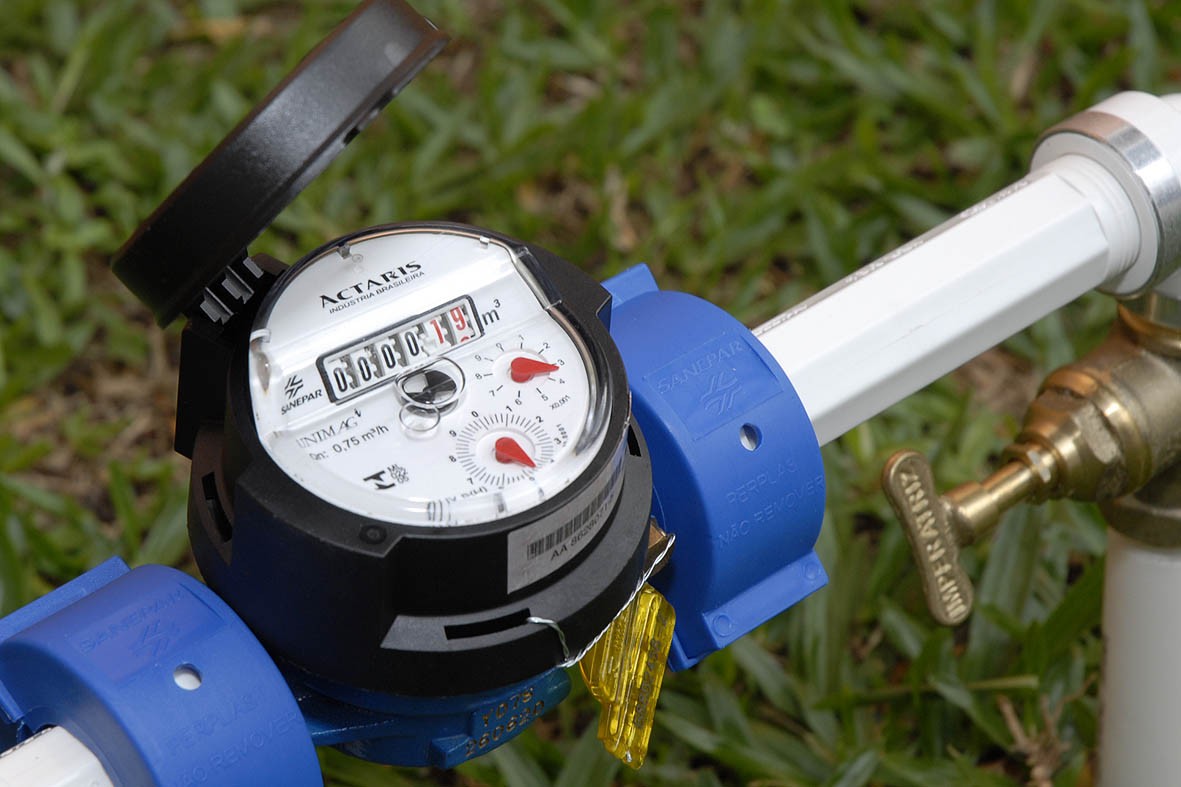
Individual water metering means installing one meter per unit in a residential building and charging each flat, office or shop for what it consumed, instead of splitting the bill by each unit’s ideal share. Since July 2021 it has been mandatory in new condominium buildings in Brazil, under Law No. 13,312/2016. In older buildings it is optional and depends on a technical survey, work on the risers and approval at the owners’ meeting.
In short:
- With shared billing, each unit pays by its ideal share, as Brazil’s Civil Code provides (art. 1,336), unless the building’s bylaws say otherwise. With individual metering, it pays for what its meter recorded.
- Law No. 13,312/2016 made individual metering mandatory in new condominium buildings, in force since July 2021.
- An older building can switch too, in six steps: survey, design, owners’ meeting, works, reading and a rule for the common areas.
- The difference between the main meter and the sum of the units is common-area consumption plus losses. When it grows, there is a leak.
- Academic research links individual metering to less waste, because each resident starts to see and pay for what they consume.
What is individual water metering?
It replaces shared billing with measurement. Without it, the building receives a single bill, from the main meter, and divides the amount among the units. With it, each unit has its own meter, and each unit’s bill follows what it consumed.
| Shared billing | Individual metering | |
|---|---|---|
| How the bill is split | By ideal share or by the bylaws’ criterion | By each unit’s measured consumption, plus its part of the common areas |
| Does whoever uses more pay more? | No: one unit’s consumption is diluted among all | Yes |
| A leak inside one unit | Disappears into the building’s total | Shows up on that unit’s bill |
| Incentive to save | Weak: one unit’s savings are split among all | Direct: whoever saves pays less |
| Arguments at owners’ meetings | Frequent | Fewer |
There are two models. In some cities, the water utility can start billing each unit separately. In other cases the bill remains single, from the main meter, and the building divides the amount by what the internal meters recorded. In both, each unit’s meter decides how much it pays.
What does the law say about individual water metering?
Law No. 13,312/2016 added a paragraph to Brazil’s Sanitation Law (Law No. 11,445/2007, art. 29, § 3): new condominium buildings shall adopt environmental sustainability standards that include, among other procedures, individual metering of water consumption per unit. The law came into force five years after publication, in July 2021.
Three practical points follow:
- A new building must leave the design stage with metering per unit.
- An older building is not obliged to switch. It can do so by decision of the owners.
- The apportionment criterion is, by default, each unit’s ideal share, unless the bylaws provide otherwise (Civil Code, art. 1,336, I). Replacing shared billing with metering is a decision for the owners’ meeting, with the quorum the bylaws and the Civil Code require.
What are the advantages of individual metering?
- Everyone pays for what they use. A resident who saves stops paying for the neighbour’s consumption.
- Less waste. Marcos Holanda’s master’s dissertation (UNICAP, 2007) presents individual metering as one of the important means of fighting waste and controlling and reducing water consumption. Daniele Souza’s (UFV, 2005), covering 300 households in Viçosa, Minas Gerais, concluded that collective metering prevents billing from fulfilling its purpose, because residents do not pay for their real consumption.
- The leak in the right place. Consumption out of pattern shows up in the unit that leaks, not diluted in the building’s total.
- Fewer disputes. The split stops being a matter of opinion and becomes a reading.
How do you introduce individual metering in an older building?
The work follows six steps, and the first decides whether all the others are feasible:
- Technical survey. Map the risers and how many supply points each unit has. Older buildings often have several risers per flat, which may require one meter per riser or a renovation that brings each unit’s supply to a single point.
- Design. Where the meters go (landings, shafts, technical areas), the route of the new pipework, the meter model and how it will be read: with a photo, on site, or remotely.
- Owners’ meeting. Approve the works, how they will be paid for and the new criterion for splitting the bill, with the quorum the bylaws require.
- Works. Install each unit’s meters, calibrate, seal and label each one, so that readings leave no doubt.
- Monthly reading. With a photo of each meter or by telemetry, always in the same period of the utility’s billing cycle.
- Common-area rule. Decide how to split what belongs to no unit: gardens, pool, cleaning and losses.
At T&D, individual metering is installed in new developments and in occupied buildings, and the monthly reading is handled by GCI, individual consumption management: the meter reader records each meter through the app, each unit receives a report with the photo of the reading, and the data is available in Excel, PDF and API.
How does the bill work after individual metering?
The utility’s bill still arrives through the main meter, except where the utility bills each unit. The building now has three numbers:
| Number | Where it comes from | What it is for |
|---|---|---|
| Total consumption | The utility’s main meter | It is what the bill charges |
| Sum of the units | The meters of each flat, office or shop | It is the basis for splitting among the units |
| Difference | Total consumption minus the sum of the units | Common areas plus losses in the building’s network |
The splitting criterion is approved at the owners’ meeting. The most direct is to divide the bill in proportion to each unit’s measured consumption and the common part by ideal share or in equal parts. The difference deserves attention every month: if it grows without any change in common-area use, there is a leak in the building’s network, and the test starts with hidden water leak: 7 signs and how to find it.
Does individual metering cut the building’s bill?
It does when it cuts consumption, and that comes from two sides: the conscious use of those who start paying for what they use, and the discovery of leaks that used to be diluted in the shared bill. Without those two things, metering only redistributes the same bill.
The other measures that add to individual metering, from common areas to notices for residents, are in saving water in a residential building.
Frequently asked questions
Is individual water metering mandatory?
For new condominium buildings, yes: Brazil’s Law No. 13,312/2016 requires individual metering per unit and has been in force since July 2021. For buildings constructed before, there is no obligation, and switching depends on the owners’ decision.
Can an older building introduce individual metering?
Yes, after a survey of the risers shows where to install the meters. In some buildings, a renovation is needed to bring each unit’s supply to a single point. T&D carries out individual metering both in new developments and in occupied buildings.
Who pays for the works?
The building, in the way approved at the owners’ meeting. The split of the cost follows the bylaws or what the meeting decides.
How are the individual meters read?
By a monthly on-site reading, ideally with a photo of each meter, or by telemetry, which reads the meters remotely. With T&D’s GCI, each unit receives a report with the photo of the reading.
Does the water utility send a bill to each flat?
It depends on the utility and the system adopted. In many cases the bill remains single, through the main meter, and the building divides the amount by each unit’s consumption. Where the utility bills units individually, each unit receives its own bill.
Sources
- Law No. 13,312 of 12 July 2016, in Portuguese: individual metering in new condominium buildings
- Law No. 11,445 of 5 January 2007, art. 29, § 3, in Portuguese
- Civil Code, Law No. 10,406/2002, art. 1,336, in Portuguese: contribution to expenses by ideal share, unless the bylaws provide otherwise
- Holanda, M. A. A. G. Medição individualizada em edifícios residenciais: controle e redução do consumo de água potável. Dissertation, UNICAP, 2007, in Portuguese
- Souza, D. O. Hábitos de consumo de água em domicílios com medição individualizada e coletiva: o caso da cidade de Viçosa, MG. Dissertation, UFV, 2005, in Portuguese
- GCI, T&D individual consumption management